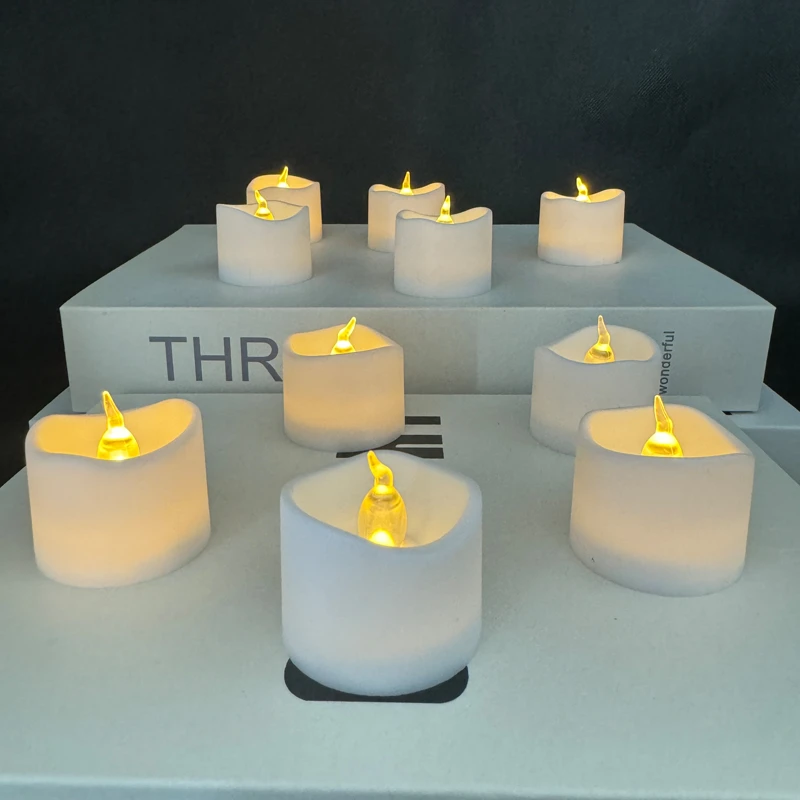
To be honest, things have been moving fast in the led candle manufacturing world lately. Everyone's chasing that "realistic flicker," right? It's not just about brightness anymore, it's about fooling the eye. I’ve seen a lot of attempts, and most of them end up looking…well, like a cheap imitation. It’s a surprisingly hard thing to get right. The whole market's shifted towards wanting that ambient, cozy feel, less about just replacing a regular candle and more about creating a mood.
And you wouldn’t believe how many people trip up on heat dissipation. Seems simple, but it’s a killer. Get it wrong, and you’re looking at premature LED failure. I encountered this at a factory in Dongguan last time, they were using a really cheap thermal paste and were shocked when the whole batch started failing after a week. Shocked, I tell you! It's like they didn’t even think it through. Seriously.
Anyway, I think people underestimate just how important the housing material is. We're primarily using a high-density polyethylene for most of our candle bodies. It’s got a good weight to it, feels solid in your hand, and doesn't smell like…well, some of the cheaper plastics. You get that cheap plastic smell and customers will know something's up. It also resists cracking better than polypropylene, which is crucial for outdoor use. Strangely, the feel is everything. It’s gotta feel substantial.
Recent Trends in led candle manufacturer
Have you noticed everyone is obsessed with smart home integration now? It’s not enough to just look like a candle, it has to connect to Alexa. I mean, seriously. We’re seeing a huge demand for wifi-enabled candles, with adjustable flame height and color control. It's a bit much, if you ask me, but who am I to judge? It’s what the market wants.
Also, the trend towards bio-plastics is picking up steam. People are getting more conscious about sustainability, which is good. It’s a bit more expensive, and the performance isn't quite the same yet, but it’s getting there.
Common Design Pitfalls in led candle manufacturer
The biggest one, hands down, is skimping on the LED driver. Seriously. A cheap driver will introduce flicker, noise, and ultimately, failure. It’s the heart of the whole operation, and it needs to be good quality. I've seen too many designs where they try to save a few cents on the driver and then wonder why the candles are unreliable. It always comes back to bite them.
Another thing is forgetting about ventilation. LEDs generate heat, even the efficient ones. If you trap that heat inside a sealed enclosure, you’re asking for trouble. You need to provide some way for the heat to escape, whether it’s through vents, heat sinks, or careful material selection.
And finally, don't underestimate the importance of the lens. The lens is what shapes the light and creates that realistic flicker. A poorly designed lens will result in harsh, uneven light that just doesn’t look natural.
Material Selection for led candle manufacturer
We’ve experimented with a lot of different materials over the years. ABS is okay for prototyping, but it's too brittle for long-term use. Polycarbonate is good for impact resistance, but it gets yellowed over time. That HDPE I mentioned before is really the sweet spot. It's durable, weather-resistant, and doesn’t require a lot of processing.
The wax coating is also critical. We use a paraffin wax blend that’s specially formulated to resist melting and cracking. It's got a slight vanilla scent, which adds to the ambiance. Finding the right wax blend took a lot of trial and error. Some waxes just don’t adhere well to the plastic, and others melt too easily. It’s a surprisingly complex science.
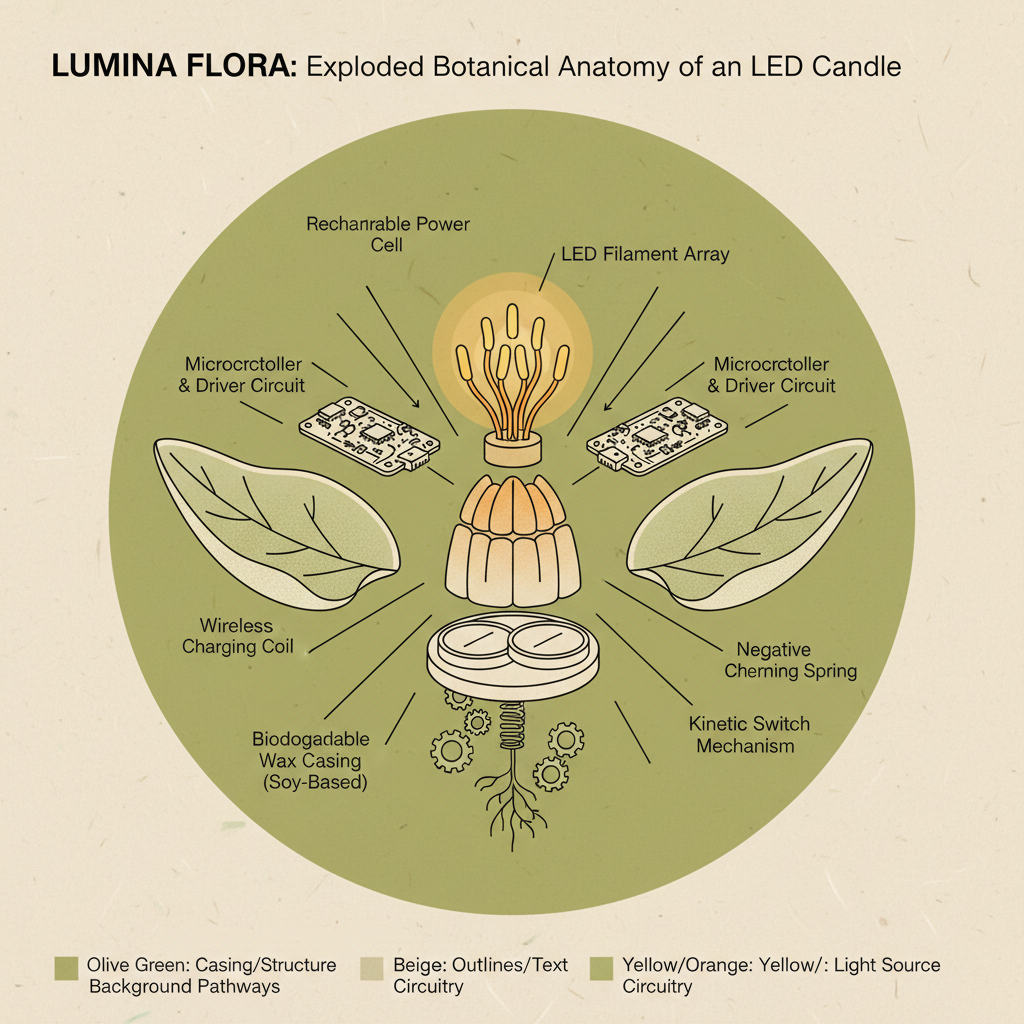
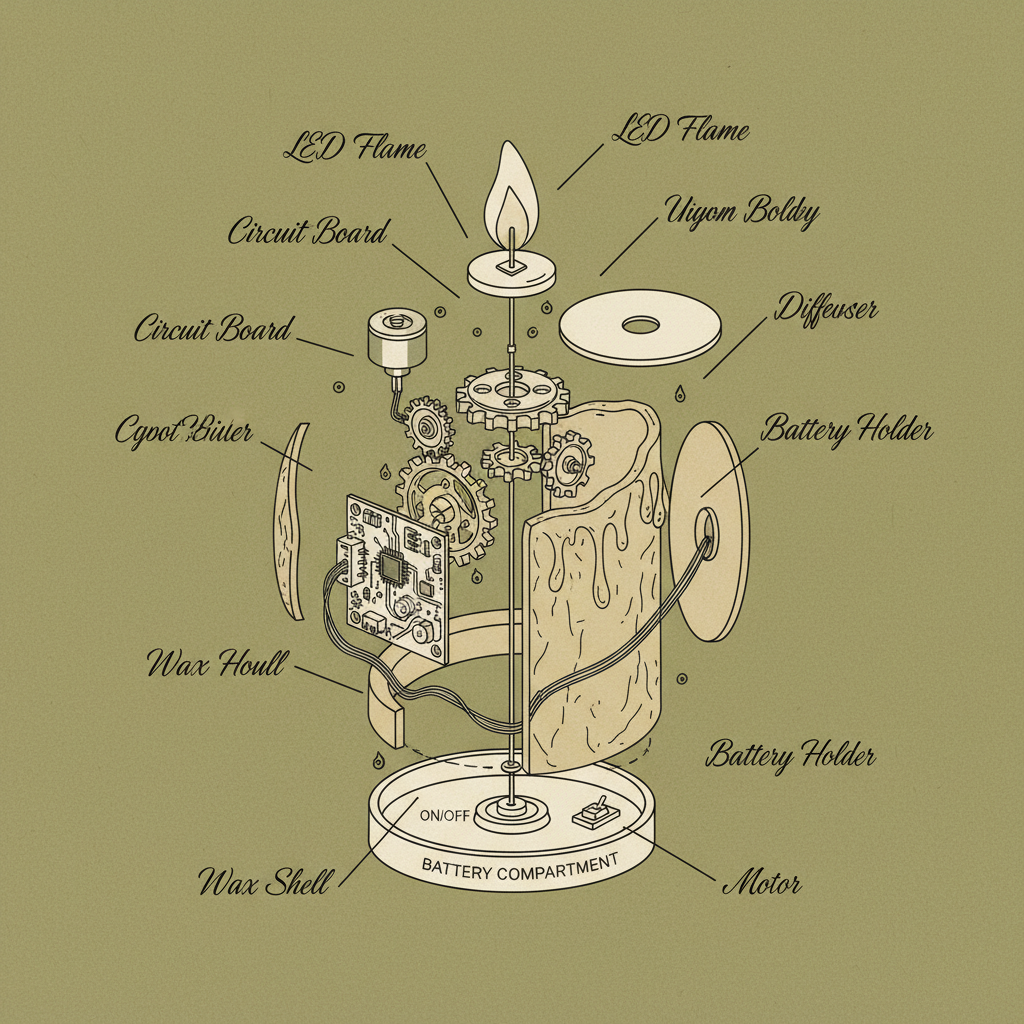
For the internal components, we use a lot of aluminum for heat sinks. It’s lightweight, conducts heat really well, and it’s relatively inexpensive. We also use silicone gaskets to seal the enclosure and prevent moisture from getting inside. It’s the little things, you know? Those little details are what separate a good product from a great one.
Testing and Real-World Application of led candle manufacturer
Forget those lab tests. I mean, they’re useful for basic functionality, but they don’t tell you the whole story. We test our candles the way people actually use them. We leave them burning outdoors in the rain, we drop them on concrete, we leave them in a hot car. We want to see how they hold up under real-world conditions.
We also send samples to a bunch of different customers and get their feedback. That’s invaluable. You’d be surprised how differently people use these things. Some people use them as nightlights, others use them for meditation, and some people just like to put them on their dinner table. You gotta account for all those different use cases.
led candle manufacturer Performance Metrics
Advantages and Disadvantages of led candle manufacturer
The advantages are pretty obvious, right? Safety, longevity, no fire hazard. But honestly, the biggest advantage is just convenience. People don't want to be fussing with wax and matches. They want something that just works.
The downsides? Well, they still don't quite capture the warmth of a real flame. And the initial cost is higher. But the long-term savings outweigh that, in my opinion. Plus, the batteries… always the batteries. People forget to replace them, and then they complain that the candle doesn't work. It’s frustrating.
Customization Options for led candle manufacturer
We're pretty flexible when it comes to customization. We can do different colors, sizes, and shapes. We can also add custom logos or engravings. Last month, that small boss in Shenzhen who makes smart home devices insisted on changing the interface to instead of Micro-USB, and the result was a three-week delay in production. Three weeks! He said his customers expected it, but I think he just wanted to be different. He ended up regretting it, though, because his customers didn’t even notice.
We can also adjust the flicker pattern to create different effects. Some customers want a very realistic flicker, while others prefer a more subtle effect. It all depends on the application.
A Customer Story Regarding led candle manufacturer
We had a hotel chain approach us last year that wanted to use our candles in their guest rooms. They were looking for a safe and elegant alternative to traditional candles. They ended up ordering 10,000 units, and they've been really happy with them. They told us it really elevated the ambiance in their rooms and reduced their insurance costs.
But it wasn’t easy getting there. They had very specific requirements for the color temperature and brightness, and it took a lot of tweaking to get it just right. We went back and forth with their interior designer for weeks, sending samples and getting feedback. It was a pain, but ultimately, it was worth it.
I remember one engineer at their end constantly emailing me about the CRI value. CRI, CRI, CRI! Like I don't know what that is. Anyway, they got what they wanted, and the guests love the candles.
Summary of Key Factors Influencing led candle manufacturer Quality
| Component Quality |
Manufacturing Process |
Material Durability |
Real-World Testing |
| High-grade LEDs & Driver |
Automated assembly lines |
HDPE Plastic Housing |
Outdoor exposure tests (3 months) |
| Robust thermal paste application |
Strict quality control checkpoints |
Paraffin wax coating (UV resistant) |
Drop tests (1.5 meters) |
| Quality silicone gaskets |
Precision lens molding |
Aluminum heat sinks |
Temperature cycle tests (-20°C to 60°C) |
| Certified safety components |
Consistent batch calibration |
Reinforced base structure |
Humidity resistance tests (95% RH) |
| Long-life battery integration |
Thorough visual inspection |
Corrosion-resistant materials |
Vibration tests (simulating transport) |
| Optimized power management |
Packaging & shipping validation |
UV stabilized polymers |
Customer feedback analysis |
FAQS
A well-maintained led candle manufacturer, meaning one that hasn’t been dropped repeatedly or exposed to extreme temperatures, should last upwards of 20,000 hours. That's roughly 27 years if you used it for 2 hours a day. The LED itself is usually the last thing to fail; it’s more likely the driver or battery will give out first. We've seen some units still going strong after 5 years of heavy use, but it really depends on the conditions.
Generally, yes, they're much safer than traditional candles. There's no open flame, so the risk of fire is significantly reduced. However, it's still important to use a reputable brand with safety certifications, and to avoid placing them near flammable materials. Also, make sure the batteries are in good condition and haven't corroded. We’ve seen incidents where corroded batteries have caused minor shorts, but thankfully no major fires.
That's a good question. Most led candle manufacturers aren't designed for prolonged exposure to the elements. However, some models are specifically designed for outdoor use, with waterproof housings and UV-resistant materials. These can generally withstand rain and moderate humidity. Avoid using non-waterproof models in wet conditions, as this can damage the internal components and create a safety hazard.
It depends on the model. Some led candle manufacturers have replaceable batteries, while others are sealed. Replaceable batteries are generally preferred, as they extend the lifespan of the candle. If your model has a battery compartment, make sure to use the correct type of batteries and to dispose of the old batteries properly. Sealed units are more convenient, but eventually, they’ll need to be replaced entirely.
Warm white light has a yellowish hue that's similar to the light from a traditional candle. It creates a cozy and relaxing atmosphere. Cool white light has a bluer hue that's more energizing and modern. It’s often used in task lighting. For led candle manufacturers, warm white is generally preferred, as it mimics the ambiance of a real flame. But it really comes down to personal preference.
Some led candle manufacturers are dimmable, but not all. If you want a dimmable candle, make sure to check the product specifications before you buy it. Dimmable candles typically require a compatible dimmer switch or remote control. The ability to dim is really useful for creating different moods and settings. It’s a feature we’re adding to more and more of our models.
Conclusion
Ultimately, led candle manufacturers have come a long way. They're safer, more convenient, and more durable than traditional candles. They're not perfect – they still don't quite capture the warmth of a real flame – but they're a pretty good substitute. The market is pushing for integration, customization, and a more realistic feel. Getting the materials right and doing thorough testing are absolutely crucial.
And look, at the end of the day, whether this thing works or not, the worker will know the moment he tightens the screw. If the plastic feels flimsy, if the LED flickers, or if the battery compartment is loose, they’ll know. That’s what really matters. Visit our website at led candle manufacturer to learn more.